
Hair fall is common, but ongoing hair loss or noticeable hair thinning should not always be ignored. Many people notice more hair on their pillow, comb, or shower floor and wonder whether it is normal or a sign of a bigger hair concern.
The good news is that early attention can help identify the reason behind hair loss and guide you toward the right care.
If you are experiencing continued hair fall, visible thinning, or changes in your hair density, consulting a dermatologist in Dwarka can help you understand what may be causing it and what options may be suitable for you.
Hair Fall and Hair Thinning: What Is the Difference?
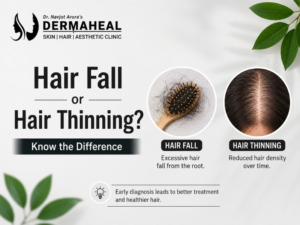
Hair fall means you are losing more hair than usual. You may notice extra strands while washing, brushing, or styling your hair.
Hair thinning is slightly different. It means your hair may gradually look less dense, especially around the hairline, crown, or parting.
You can have hair fall without obvious thinning, or you may notice thinning even when you do not see a large amount of hair falling every day.
Understanding this difference is important because different hair concerns can have different causes.
When Is Hair Fall Considered a Concern?
Occasional hair shedding can happen due to normal changes in the hair growth cycle. However, you may want to consult a skin and hair specialist in Dwarka if you notice:
- Hair fall continuing for several weeks or months
- A visible increase in hair shedding
- Hair becoming noticeably thinner
- A wider hair parting
- Receding hairline
- Reduced hair density around the crown
- More scalp becoming visible
- Sudden patches of hair loss
- Hair loss along with scalp itching, redness, or scaling
- Hair loss that is affecting your confidence
Persistent or sudden changes are worth discussing with a dermatologist rather than trying multiple products without knowing the underlying reason.
Common Reasons for Hair Fall and Hair Thinning
Hair loss can happen for many reasons. It is not always related to one single factor.
1. Stress and Lifestyle Changes
Periods of high stress, poor sleep, major lifestyle changes, or emotional strain may affect the normal hair cycle. Some people notice increased shedding after a stressful period.
2. Nutrition and Diet
An unbalanced diet may affect overall hair health. Poor nutrition can sometimes contribute to increased hair shedding or weaker-looking hair.
A dermatologist can help determine whether further evaluation is needed rather than relying only on hair supplements.
3. Hormonal Changes
Changes in hormones can affect hair growth in both men and women. Hair thinning may sometimes be associated with hormonal or other underlying concerns.
4. Family History
Some types of hair thinning can run in families. Gradual thinning around the hairline or crown may be a sign that professional evaluation is useful.
5. Scalp Problems
Certain scalp conditions can cause itching, scaling, inflammation, or increased hair shedding. Treating the scalp concern may be an important part of improving hair health.
6. Hair Care and Styling
Frequent heat styling, tight hairstyles, harsh treatments, or repeated chemical treatments may contribute to hair damage and breakage.
A dermatologist can help differentiate hair breakage from actual hair loss.
When Should You See a Dermatologist for Hair Loss?
You should consider seeing a dermatologist when hair fall becomes persistent, noticeable, sudden, or is accompanied by other scalp changes.
A dermatologist in Dwarka can assess your hair and scalp, understand your history, and determine what may be contributing to the problem.
It is especially important to seek professional advice if you notice:
- Sudden or rapid hair loss
- Visible bald patches
- Increasing scalp visibility
- Significant hairline changes
- Persistent scalp problems
- Hair loss that continues despite basic care
- Hair thinning that is gradually getting worse
The earlier a concern is assessed, the easier it can be to understand what type of care may be appropriate.
What Happens During a Hair Loss Consultation?
A hair loss consultation generally begins with a discussion about your concern.
The dermatologist may want to understand:
- When the hair fall started
- Whether it is sudden or gradual
- Your family history
- Recent changes in health or lifestyle
- Hair care and styling habits
- Any scalp symptoms
- Previous hair treatments
The doctor can then assess your scalp and hair pattern and decide whether additional evaluation is needed.
The goal is not to recommend the same treatment to everyone. The right approach depends on the individual cause, hair condition, and pattern of hair loss.
Hair Loss Treatment Should Be Personalised
There is no single solution that works for every type of hair loss.
Depending on the concern, a dermatologist may recommend a suitable hair care or treatment plan. This may include medical care, in-clinic hair treatments, or other options based on the individual’s condition.
At Dermaheal Skin & Hair Clinic in Dwarka, hair concerns are evaluated by dermatology specialists before a treatment plan is recommended.
You can explore the dedicated Hair Loss Treatment page to understand the clinic’s approach.
For patients who may require other options, Dermaheal also provides information about Hair Transplant and Hair PRP Treatment.
Hair Fall Does Not Always Mean You Need a Hair Transplant
One common mistake is assuming that every case of hair thinning requires a hair transplant.
That is not always the case.
Hair loss can have different causes, and the appropriate approach depends on factors such as the pattern, severity, duration, and overall condition of the hair and scalp.
A consultation with a dermatologist can help you understand whether you need treatment for hair loss, an in-clinic hair treatment, or whether a hair transplant should even be considered.
This is why diagnosis and professional guidance should come before choosing a treatment.
Simple Ways to Support Healthy Hair
While the right care depends on the cause of hair loss, some general habits can support better hair and scalp care:
- Follow a balanced diet
- Avoid very tight hairstyles
- Reduce unnecessary heat styling
- Be gentle while brushing wet hair
- Avoid frequently changing hair products
- Keep the scalp clean
- Manage stress and maintain good sleep habits
- Do not start treatments or supplements without appropriate advice
- Seek professional help if hair loss continues
These habits can support general hair health, but they should not replace professional evaluation when hair loss is persistent.
Why Choose a Dermatologist in Dwarka for Hair Concerns?
Choosing a qualified dermatologist can help you avoid trial-and-error treatment.
A dermatologist can assess the hair and scalp, understand the possible reason for the concern, and recommend an appropriate plan based on your individual needs.
For people searching for a dermatologist near me, hair loss treatment in Dwarka, or a skin and hair specialist in Dwarka, Dermaheal provides dermatology and hair care services in Sector 7, Dwarka, Delhi.
You can learn more about the clinic’s dermatologists and explore the available hair and skin treatments.
Frequently Asked Questions
1. Is hair fall normal?
Some hair shedding can be part of the normal hair growth cycle. However, persistent, sudden, or noticeably increased hair fall should be evaluated by a dermatologist.
2. What is the difference between hair fall and hair thinning?
Hair fall refers to increased shedding of hair, while hair thinning means a gradual reduction in visible hair density. Both can occur together or separately.
3. When should I see a dermatologist for hair fall?
Consider consulting a dermatologist if hair loss continues, becomes noticeable, causes visible thinning, or is associated with scalp changes or bald patches.
4. Can hair thinning be treated?
Hair thinning can have different causes, so treatment depends on the reason and the condition of your hair and scalp. A dermatologist can recommend an appropriate approach after evaluation.
5. Does hair fall always require a hair transplant?
No. A hair transplant is not suitable or necessary for every person with hair loss. The appropriate option depends on the cause and pattern of hair loss.
6. Can stress cause hair fall?
Stress may contribute to increased hair shedding in some people. If shedding continues or becomes significant, professional evaluation can help identify other possible factors.
7. Can I visit a dermatologist for hair and scalp problems?
Yes. Dermatologists treat concerns involving the skin, hair, and scalp. They can assess persistent hair fall, thinning, scalp concerns, and other changes.
Conclusion
Hair fall and hair thinning are common concerns, but persistent or noticeable changes should not be ignored. Understanding the difference between temporary shedding and ongoing hair loss can help you decide when professional advice is needed.
If you are experiencing continued hair fall, visible thinning, a changing hairline, or scalp concerns, consider consulting a dermatologist in Dwarka for an individual assessment.
Dermaheal Skin & Hair Clinic provides dermatology and hair care services in Dwarka, Delhi. You can explore hair loss treatment, meet the dermatologists, or book a consultation.