
Have you noticed that your skin is becoming darker, uneven, or less clear than before? Skin darkening is common and can happen for many reasons. Sun exposure, hormonal changes, acne marks, skin irritation, and some health conditions can all affect skin colour.
A darker skin tone does not always mean there is a serious problem. However, if the change is sudden, continues to increase, or appears in specific areas, it is important to understand the possible cause.
At Dermaheal Skin & Hair Clinic in Dwarka, skin concerns such as pigmentation and uneven skin tone are assessed by dermatologists to understand the cause before suggesting suitable care.
What Causes Skin to Get Darker?
Skin darkening happens when the skin produces more of its natural pigment. This can be triggered by several factors.
1. Sun Exposure
Regular exposure to sunlight is one of the most common causes of skin darkening. Sunlight can increase pigment production and make the skin look darker or uneven.
The face, neck, hands, and other exposed areas are more likely to develop pigmentation.
If you spend a lot of time outdoors, protecting your skin from sunlight is an important part of managing pigmentation.
2. Hormonal Changes
Hormonal changes can sometimes cause darker patches on the face. This is commonly seen as melasma, especially around the cheeks, forehead, nose, and upper lip.
Hormonal changes during pregnancy or other stages of life may also contribute to pigmentation.
If pigmentation keeps returning despite regular skin care, a dermatologist can help identify the possible cause.
3. Acne and Skin Marks
Acne can leave dark marks after the pimple has healed. These marks are often called post-acne pigmentation.
Picking or squeezing pimples can make these marks more noticeable and may increase the chance of long-lasting skin discolouration.
If you are dealing with both acne and dark marks, treating the acne and pigmentation together can provide better long-term results.
You can learn more about acne-related concerns through our Acne & Acne Scars treatment page.
4. Skin Irritation
Harsh skin care products, frequent scrubbing, unsuitable treatments, or irritation can sometimes make pigmentation worse.
When the skin becomes irritated, it may respond by producing more pigment.
This is why using too many products or frequently changing your skin care routine may not always improve uneven skin tone.
5. Age-Related Skin Changes
As we get older, changes in the skin can become more noticeable. Sun exposure accumulated over the years may contribute to uneven pigmentation and darker spots.
Age-related pigmentation can appear on areas that receive regular sunlight, including the face and hands.
6. Certain Medicines or Health Conditions
Some medicines and health conditions can also be linked with changes in skin colour.
If your skin becomes darker suddenly without an obvious reason, especially if the change is widespread or accompanied by other symptoms, it is better to speak with a qualified healthcare professional.
Is Skin Darkening the Same as Pigmentation?
Not always.
Skin darkening describes a visible change in skin colour. Pigmentation is a broader term used for changes in the amount or distribution of skin pigment.
Pigmentation can appear as:
- Dark patches
- Brown spots
- Uneven skin tone
- Dark acne marks
- Melasma
- Sun-related pigmentation
Understanding the type of pigmentation is important because different causes may need different approaches.
What Is the Best Way to Improve Skin Pigmentation?
There is no single solution that works for every type of pigmentation.
The first step is to understand why the pigmentation has developed.
A dermatologist may look at your skin history, lifestyle, previous skin care products, sun exposure, acne history, and other factors before suggesting a suitable plan.
Depending on the cause, care may include:
- Sun protection
- Suitable skin care
- Treatment of active acne
- Products recommended by a dermatologist
- Chemical peels
- Pigmentation-focused treatments
- Other dermatologist-guided procedures
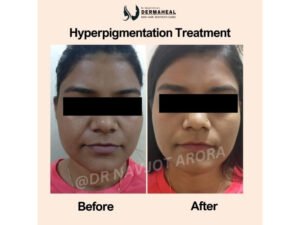
At Dermaheal, pigmentation concerns are treated according to the individual’s skin type and condition. You can also explore the dedicated Pigmentation & Melasma treatment page.
Can Pigmentation Be Completely Removed?
Pigmentation can often be improved, but results depend on its cause, depth, skin type, and how long it has been present.
Some types of pigmentation may improve with consistent care, while others may need professional treatment.
It is also important to remember that pigmentation can return, particularly when triggers such as sunlight or hormonal changes continue.
The goal should be healthy, even-looking skin rather than trying to change your natural skin colour.
How Can You Prevent Skin From Getting Darker?
Simple daily habits can help reduce factors that may worsen pigmentation.
Protect Your Skin From Sunlight
Use appropriate sun protection and try to reduce unnecessary direct sunlight exposure, especially during strong sunlight hours.
Avoid Excessive Scrubbing
Scrubbing the skin too often can cause irritation. Gentle skin care is usually a better approach.
Do Not Pick Acne
Picking pimples can increase the chance of dark marks after acne heals.
Choose Skin Care Carefully
Avoid using multiple strong products without knowing whether they are suitable for your skin.
Treat the Cause
If pigmentation continues to return, treating only the visible dark patches may not be enough. Finding and managing the underlying trigger is important.
When Should You See a Dermatologist for Skin Darkening?
You should consider seeing a dermatologist if:
- Your skin is becoming darker without a clear reason.
- Dark patches are spreading or becoming more noticeable.
- Pigmentation does not improve with basic skin care.
- You have recurring pigmentation.
- Dark marks are appearing after acne.
- You have pigmentation along with other skin changes.
- You are unsure which treatment is suitable for your skin.
A dermatologist can help identify the type of pigmentation and guide you toward suitable treatment options.
Why Choose Dermaheal for Pigmentation Concerns?
Dermaheal Skin & Hair Clinic provides dermatologist-led care for pigmentation, melasma, acne marks, and uneven skin tone.
The clinic focuses on understanding the individual skin concern before recommending treatment. Its dermatologists also consider Indian skin types when planning skin care and professional treatments.
You can meet the dermatology team on the Dermaheal Doctors page or explore the Pigmentation & Melasma treatment options.
Frequently Asked Questions
Why is my face getting darker?
Your face may become darker because of sunlight, hormonal changes, acne marks, skin irritation, or other factors. If the change is sudden or persistent, consult a dermatologist to identify the cause.
How can I reduce skin pigmentation naturally?
Protecting your skin from sunlight, avoiding unnecessary irritation, not picking acne, and following a simple skin care routine can help prevent pigmentation from getting worse. Persistent pigmentation may require professional assessment.
Does sun exposure make skin darker?
Yes. Regular sunlight exposure can increase pigment production and make exposed skin appear darker or uneven.
Can acne cause dark skin marks?
Yes. Acne can leave dark marks after the pimples heal. These marks are especially common when acne is picked or squeezed.
Is pigmentation treatable?
Many types of pigmentation can be improved with the right care. The suitable approach depends on the cause and type of pigmentation.
Should I see a dermatologist for pigmentation?
Yes, especially if pigmentation is persistent, spreading, recurring, or appearing without an obvious cause. A dermatologist can help identify the reason and recommend suitable care.
Book a Dermatologist Consultation in Dwarka
If your skin is becoming darker or you are dealing with persistent pigmentation, do not keep trying random skin care products.
Get your skin assessed by a dermatologist and understand what may be causing the change.
Book a consultation with Dermaheal Skin & Hair Clinic in Dwarka, New Delhi, for personalised guidance on pigmentation and other skin concerns.
Book a Consultation | Contact Dermaheal