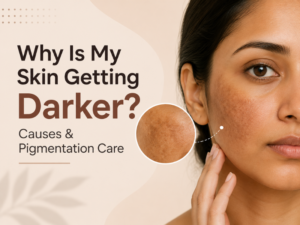


Have you noticed that your skin is becoming darker or that certain areas of your face look more uneven than before? Skin darkening is common and can happen because of sun exposure, acne, hormonal changes, skin irritation and several other reasons.
Pigmentation is not always a sign of a serious skin problem. However, if your skin is getting darker suddenly, the pigmentation keeps increasing, or it does not improve with basic skincare, it may be time to consult a dermatologist.
If you are looking for a dermatologist in Dwarka, Delhi, understanding the possible cause of your pigmentation is the first step towards choosing the right care.
What Is Skin Pigmentation?
Skin pigmentation refers to the colour of your skin. A natural substance in the skin gives it its colour. When your skin produces more of this substance in certain areas, those areas can appear darker.
This may lead to:
- Dark patches on the face
- Uneven skin tone
- Brown spots
- Dark marks after acne
- Dark areas around the mouth
- Darkening on the forehead or cheeks
The cause of pigmentation can be different for every person. Therefore, the right treatment also depends on the reason behind the skin darkening.
Why Is Your Skin Getting Darker?
1. Sun Exposure
Regular exposure to sunlight is one of the most common reasons for increased pigmentation. Sun exposure can make existing dark spots more noticeable and may lead to an uneven skin tone.
People who spend a lot of time outdoors without proper sun protection may notice gradual darkening of the face, forehead, cheeks and other exposed areas.
2. Hormonal Changes
Hormonal changes can sometimes trigger pigmentation. This is commonly seen as dark patches on the cheeks, forehead, nose or upper lip.
This type of pigmentation may develop during certain hormonal changes and can sometimes become more noticeable after sun exposure.
3. Acne and Skin Inflammation
A pimple may disappear, but the dark mark left behind can remain for weeks or months.
This is especially common after inflamed acne. Repeated breakouts can result in multiple dark marks, making the skin look uneven.
You can learn more about acne and acne-related skin concerns.
4. Skin Irritation
Using products that do not suit your skin can cause irritation. Frequent rubbing, scratching or harsh skincare may also contribute to dark marks.
This is why using too many products at the same time is not always better for your skin.
5. Pigmentation After a Skin Problem
Darkening can sometimes occur after the skin heals from inflammation, injury or another skin problem.
The skin may remain darker even after the original problem has improved.
6. Age and Skin Changes
As we grow older, changes in the skin can make certain spots and areas of uneven colour more visible.
Sun exposure accumulated over time can also contribute to the appearance of pigmentation.
Common Types of Pigmentation
Not all pigmentation looks the same.
Melasma
Melasma usually appears as brown or darker patches on areas such as the cheeks, forehead and upper lip. It can be influenced by sunlight and hormonal changes.
Dark Marks After Acne
These are flat dark spots that appear after acne or skin inflammation. They can gradually become lighter, but persistent marks may need professional care.
Sun-Related Dark Spots
Long-term sun exposure can contribute to darker spots on exposed areas of the skin.
Uneven Skin Tone
Sometimes the skin may not have clearly defined spots but may simply look dull or uneven in colour.
Identifying the type of pigmentation is important before starting treatment.
Can Pigmentation Go Away on Its Own?
Some mild pigmentation and dark marks may become lighter over time, especially when the cause is controlled.
However, pigmentation can also persist or return if the underlying trigger continues.
For example, if sun exposure continues without proper protection, pigmentation may become more noticeable again.
That is why pigmentation treatment should focus not only on improving existing dark areas but also on reducing the factors that may cause them to return.
When Should You See a Dermatologist?
You should consider seeing a dermatologist if:
- Your skin is getting darker without an obvious reason.
- Dark patches continue to increase.
- Pigmentation does not improve over time.
- You have recurring pigmentation.
- Dark marks are affecting your confidence.
- You have tried skincare without seeing improvement.
- Pigmentation appears suddenly or looks different from your usual skin marks.
A dermatologist can examine your skin and help determine what may be causing the pigmentation.
If you are searching for a dermatologist in Dwarka, a professional skin assessment can help you understand your specific concern.
How Is Pigmentation Treated?
Treatment depends on the cause, type and severity of pigmentation.
A dermatologist may suggest a personalised combination of skincare and in-clinic care. The goal is to improve uneven skin tone while keeping the skin healthy.
At Dermaheal Skin & Hair Clinic, Dwarka, pigmentation and melasma are assessed before a treatment plan is recommended. You can explore the pigmentation and melasma concern page to learn more.
The clinic also provides treatment options for pigmentation, depending on individual skin needs. You can explore the complete treatment options.
How Can You Prevent Pigmentation From Getting Worse?
A few simple habits can help support healthier-looking skin:
- Protect your skin from excessive sun exposure.
- Use sun protection regularly.
- Avoid picking pimples.
- Do not use harsh products without guidance.
- Keep your skincare routine simple and consistent.
- Avoid frequent rubbing or scrubbing.
- Treat acne and other skin problems early.
- Consult a dermatologist if pigmentation keeps returning.
Remember, pigmentation can take time to improve. Consistency is often more important than trying multiple products.
Why Choose a Dermatologist for Pigmentation?
Pigmentation can have different causes, and treating only the visible dark patch may not address the reason it developed.
A dermatologist can assess your skin, understand your history and suggest care based on your specific pigmentation.
This is especially useful for persistent pigmentation, melasma or pigmentation that keeps returning.
If you are looking for a dermatologist in Dwarka, Delhi, Dermaheal Skin & Hair Clinic provides personalised care for pigmentation, melasma and other skin concerns.
You can also book a consultation to discuss your skin concern with a dermatologist.
Frequently Asked Questions
1. Why is my face getting darker?
Facial skin can become darker due to sun exposure, pigmentation, acne marks, hormonal changes, irritation and other skin-related factors. Finding the cause is important before choosing treatment.
2. Can sun exposure cause pigmentation?
Yes. Regular sun exposure can increase pigmentation and make existing dark spots more noticeable.
3. Is pigmentation permanent?
Not always. Some pigmentation may gradually improve, while persistent pigmentation may require professional care.
4. What is the best treatment for pigmentation?
There is no single treatment that is best for everyone. The right approach depends on the type and cause of pigmentation.
5. Can acne cause dark skin?
Acne can leave dark marks after the pimple heals. These marks may make the skin look uneven but are different from deeper acne scars.
6. When should I see a dermatologist for pigmentation?
See a dermatologist if pigmentation is persistent, increasing, recurring or affecting your confidence, especially when you cannot identify the cause.