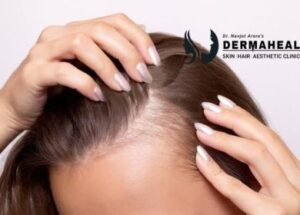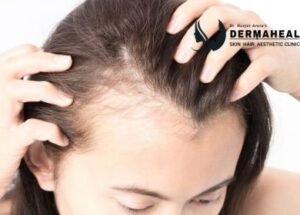

Having a baby brings many changes to the body, and increased hair shedding can be one of them. Many new mothers notice more hair on their pillow, comb, shower floor, or clothes a few months after delivery.
The good news is that postpartum hair loss is usually temporary. It commonly happens because pregnancy changes the normal hair-growth cycle. After delivery, hormone levels change, and hairs that remained in the growth phase during pregnancy can enter the resting and shedding phase.
This type of excessive shedding is commonly called telogen effluvium. It is different from permanent hair loss and usually improves with time.
Is Postpartum Hair Loss Normal?
Yes. Increased hair shedding after pregnancy is common.
During pregnancy, higher estrogen levels can keep more hairs in the active growth phase. As hormone levels fall after childbirth, more hairs enter the resting phase and eventually shed.
This can make the amount of hair falling out seem sudden or excessive.
You may notice:
- More hair in the shower
- Hair collecting on your pillow
- More strands in your hairbrush
- Overall thinning
- A thinner-looking ponytail
- Increased shedding while washing or combing
- Temporary loss of fullness around the hairline
Postpartum hair shedding does not necessarily mean that your hair follicles are permanently damaged.
When Does Postpartum Hair Loss Start?
Postpartum hair loss usually does not begin immediately after childbirth.
Many women notice increased shedding a few months after delivery. The shedding may become particularly noticeable around the third or fourth month. The exact timing varies from person to person.
This delay can be confusing. You may feel that everything was fine after delivery and then suddenly notice significant hair fall.
This is because changes in the hair-growth cycle take time to become visible.
How Long Does Postpartum Hair Loss Last?
For most women, postpartum hair shedding is temporary.
The excessive shedding generally settles over several months, and hair gradually returns toward its usual fullness. The American Academy of Dermatology notes that many women regain their normal hair fullness by their baby’s first birthday.
Telogen effluvium itself commonly lasts around three to six months, although the overall process of returning to normal hair density can take longer because hair grows slowly.
So, if your hair does not look exactly like it did before pregnancy within a few weeks, that does not necessarily mean something is wrong.
Hair recovery takes time.
Why Does Hair Fall After Pregnancy?
The main reason is the change in hormone levels after childbirth.
During pregnancy, hormonal changes can keep a greater number of hairs in the growth phase. After delivery, falling estrogen levels allow those hairs to move into the resting and shedding phase.
Other postpartum factors may also contribute to increased shedding or make it more noticeable, including:
- Poor sleep
- Physical stress from childbirth
- Emotional stress
- Changes in diet
- Low iron or other nutritional deficiencies
- Thyroid problems
- Illness
- Rapid weight changes
This is why persistent or unusually severe hair loss should not automatically be assumed to be normal postpartum shedding.
What Does Normal Postpartum Hair Shedding Look Like?
Normal postpartum shedding usually causes diffuse hair shedding, meaning hair becomes thinner across the scalp rather than creating one clearly defined bald patch.
You may notice more hair falling during washing or brushing while the scalp itself looks relatively healthy.
Some women also notice that their hair feels thinner or their ponytail looks smaller.
However, the pattern and severity can vary.
If you develop clearly defined bald patches, significant scalp inflammation, severe itching, or rapidly progressive thinning, another type of hair loss may be involved.
Can Breastfeeding Cause Hair Loss?
Breastfeeding itself is not usually considered the main cause of postpartum hair shedding.
The major trigger is the hormonal and physiological change associated with pregnancy and childbirth.
However, breastfeeding can increase nutritional demands, and inadequate nutrition may contribute to hair problems in some women.
If you are breastfeeding and experiencing significant hair loss, avoid starting supplements or herbal hair-loss products without discussing them with your doctor, particularly because some ingredients may not be appropriate during breastfeeding.
Can Iron Deficiency or Thyroid Problems Cause Hair Loss After Pregnancy?
Yes.
Not all hair loss after childbirth is simply postpartum shedding.
Iron deficiency, thyroid disorders, nutritional deficiencies, stress, and other health conditions can also contribute to hair loss. Thyroid problems can be particularly relevant during the postpartum period.
If shedding is severe, persistent, or accompanied by other symptoms, a dermatologist or physician may recommend an appropriate evaluation.
Depending on your symptoms and medical history, your doctor may consider tests for issues such as iron deficiency or thyroid dysfunction.
The right tests should be decided based on your individual situation rather than ordering every possible test.
What Can You Do for Postpartum Hair Loss?
There is no instant treatment that can stop normal postpartum shedding overnight.
The main approach is to support healthy hair growth while the hair cycle returns to normal.
1. Eat a Balanced Diet
Make sure your diet provides adequate protein, iron, vitamins, minerals, and other nutrients.
If you have dietary restrictions or concerns about deficiencies, discuss them with your doctor or a qualified nutrition professional.
2. Be Gentle With Your Hair
Avoid unnecessary pulling, excessive heat, and harsh chemical treatments while your hair is shedding.
Use gentle hair-care practices and avoid hairstyles that place strong tension on the roots.
3. Avoid Tight Hairstyles
Tight ponytails, buns, braids, or other hairstyles that repeatedly pull on the hair can contribute to hair damage and traction-related hair loss.
Choose comfortable hairstyles that do not pull tightly on the scalp.
4. Avoid Unnecessary Hair Supplements
More supplements do not always mean better hair growth.
If you suspect a nutritional deficiency, it is better to discuss testing and supplementation with your healthcare provider.
This is particularly important during breastfeeding.
5. Be Patient
Postpartum hair recovery takes time.
The hair-growth cycle cannot be changed overnight, so seeing gradual improvement is more realistic than expecting immediate regrowth.
Can Postpartum Hair Loss Be Treated?
Treatment depends on the cause.
If the hair shedding is normal postpartum telogen effluvium, observation and supportive hair care may be sufficient because the condition usually improves naturally.
However, if another condition is contributing to the hair loss, treatment may be necessary.
A dermatologist can determine whether the shedding is related to postpartum hormonal changes or another problem such as:
- Iron deficiency
- Thyroid disease
- Female-pattern hair loss
- Alopecia areata
- Scalp inflammation
- Nutritional deficiencies
- Traction from hairstyles
- Other forms of hair loss
Early diagnosis is useful because different causes require different treatments.
When Should You See a Dermatologist for Postpartum Hair Loss?
You should consider consulting a dermatologist in Dwarka if:
- Hair shedding is severe or continues for a long time.
- Your hair is not gradually becoming fuller.
- You develop bald patches.
- Your scalp is itchy, painful, red, or inflamed.
- Your hairline is changing noticeably.
- You have significant thinning at the crown or parting.
- You feel unusually tired or have other symptoms suggesting a nutritional or thyroid problem.
- Hair loss continues beyond the expected recovery period.
- You are worried that something other than postpartum shedding is happening.
The American Academy of Dermatology recommends seeing a dermatologist if normal hair fullness has not returned by around one year after childbirth because another cause may be contributing to the hair loss.
Frequently Asked Questions
1. How much hair loss is normal after pregnancy?
Increased shedding is common after pregnancy and can be much more noticeable than normal daily shedding. Postpartum telogen effluvium usually causes diffuse shedding rather than permanent baldness.
2. When does postpartum hair loss start?
Postpartum hair shedding commonly becomes noticeable a few months after childbirth. It may peak around four months after delivery, although timing varies between individuals.
3. How long does postpartum hair loss last?
The excessive shedding commonly settles over several months. Many women regain normal hair fullness by their baby’s first birthday, although complete visual recovery can take time because hair grows slowly.
4. Can postpartum hair loss be prevented?
Normal postpartum hair shedding is mainly related to hormonal changes, so it cannot always be prevented. Gentle hair care, adequate nutrition, avoiding tight hairstyles, and addressing nutritional or medical problems can support healthy hair growth.
5. When should I see a dermatologist for postpartum hair loss?
See a dermatologist if shedding is severe, lasts longer than expected, causes bald patches, affects the scalp, or does not show gradual improvement. A dermatologist can check whether another condition is contributing to the hair loss.
For more information, visit our Home Page. Contact us for more details.
https://dermaheal.co.in/#contact
https://dermaheal.co.in/doctors
https://dermaheal.co.in/gallery
Do Not Ignore Persistent Postpartum Hair Loss
Postpartum hair shedding can be alarming, but in most cases it is a temporary response to the hormonal changes that occur after childbirth.
If your hair is shedding more than expected, remember that recovery takes time. At the same time, persistent, severe, or unusual hair loss should not simply be ignored.
Book a consultation with Dr. Navjot Singh Arora at Dermaheal Skin & Hair Clinic in Dwarka for a professional assessment of your hair and scalp and a personalized treatment plan.
Visit Dermaheal Skin & Hair Clinic
Address:
C-712, Ramphal Chowk, Block D, Sector 7 Dwarka, Palam, near Shiksha Bharti School, New Delhi – 110075
Contact:
+91 80809 10191
+91 73794 64999
Email:
info.dermaheal@gmail.com
Clinic Timings:
Monday to Saturday: 10:00 AM – 7:30 PM
Sunday: 10:00 AM – 7:00 PM
Book your consultation today and take the right step toward understanding your postpartum hair loss and supporting healthier hair growth.