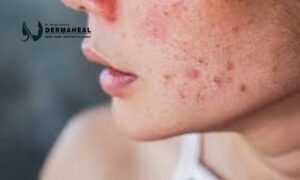

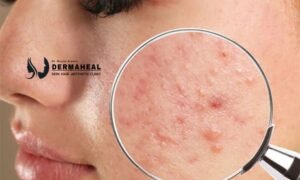
Hormonal acne can be frustrating, especially when pimples keep returning around the jawline, chin, lower face, or neck. You may notice breakouts before your period, during periods of hormonal change, or even after trying several skincare products.
The important point is that hormonal acne is not simply a skincare problem. Hormones can influence oil production, clogged pores, and inflammation, so treatment often needs a more personalized approach.
If you are looking for hormonal acne treatment in Dwarka, a dermatologist can first identify the pattern and possible triggers before recommending medication, skincare, or other treatments.
What Is Hormonal Acne?
Hormonal acne is acne that is influenced by changes in hormone activity, particularly hormones that can increase oil production and affect the skin’s tendency to develop clogged pores and inflammation.
It is commonly seen in adult women, although hormonal factors can contribute to acne in different people.
Typical signs include:
- Repeated pimples around the chin and jawline
- Acne on the lower face or neck
- Deep, painful or tender pimples
- Breakouts that become worse around the menstrual cycle
- Acne that continues into adulthood
- Acne that repeatedly returns despite basic skincare
Adult acne can occur even if you did not have significant acne during your teenage years. Hormonal fluctuations are one possible factor behind adult acne.
How Can You Tell If Acne Is Hormonal?
There is no single test that automatically confirms hormonal acne.
A dermatologist usually looks at the pattern, timing, severity, duration, and medical history.
For example, acne that repeatedly appears on the lower face and becomes worse around the menstrual cycle may suggest a hormonal component.
However, similar-looking acne can have other causes. Stress, genetics, skincare products, medications, and other factors can also contribute.
That is why self-diagnosing your acne as “hormonal” is not always accurate.
Why Does Hormonal Acne Happen?
Hormonal changes can affect the sebaceous glands, which produce oil called sebum. Increased oil production can contribute to clogged pores and acne.
Hormonal fluctuations may occur during:
- Menstrual cycles
- Pregnancy
- Perimenopause
- Menopause
- Starting or stopping certain hormonal medicines
- Conditions associated with hormonal imbalance
Some women with hormonal acne may also have conditions such as polycystic ovary syndrome (PCOS). However, having acne does not automatically mean that you have PCOS.
If acne is accompanied by irregular periods, increased facial or body hair, scalp hair thinning, or other hormonal symptoms, a doctor may recommend further evaluation.
How Does a Dermatologist Diagnose Hormonal Acne?
A dermatologist usually begins with a detailed consultation and skin examination.
The doctor may ask about:
- When your acne started
- Where the acne appears
- Whether breakouts follow your menstrual cycle
- Previous acne treatments
- Current medications and supplements
- Skin and hair-care products
- Menstrual history when relevant
- Other hormonal symptoms
- Pregnancy or plans for pregnancy
- Previous scarring or pigmentation
The goal is not simply to identify pimples. It is to understand why the acne keeps returning and how severe it is.
At Dermaheal Skin & Hair Clinic in Dwarka, the acne approach focuses on controlling active acne first and then addressing acne marks and scars with a personalized plan.
What Is the First Step in Hormonal Acne Treatment?
The first step is usually controlling active acne and reducing new breakouts.
Treatment depends on the severity and type of acne.
A dermatologist may recommend topical treatments such as:
- Retinoids
- Benzoyl peroxide
- Azelaic acid
- Salicylic acid
- Other prescription acne medications
The American Academy of Dermatology’s updated acne guidance supports several topical options, including benzoyl peroxide, topical retinoids, salicylic acid, azelaic acid, and other treatments depending on the patient.
The important thing is to use the right combination for your skin instead of continuously changing products.
Can Hormonal Acne Be Treated With Medicines?
Yes. In some women, hormonal therapy can be an important part of acne treatment.
Two commonly used hormonal options are combined oral contraceptives and spironolactone. The American Academy of Dermatology notes that these treatments can help selected women with persistent hormonal acne, particularly acne affecting the lower face, jawline, and neck.
However, these medicines are not suitable for everyone.
A dermatologist needs to consider your age, medical history, medications, pregnancy plans, blood pressure, and other factors before recommending hormonal treatment.
Do not start prescription hormonal medicines on your own.
How Does Spironolactone Help Hormonal Acne?
Spironolactone is a prescription medicine that can reduce the effect of certain hormones involved in acne.
It may be considered for women who have persistent or recurring acne, particularly on the lower face and jawline.
The American Academy of Dermatology notes that improvement can begin within several weeks, although acne treatment generally requires consistent use and follow-up.
Spironolactone also has important precautions. For example, it should not be used during pregnancy because of potential risks to a developing baby.
Your dermatologist will decide whether it is appropriate and how it should be monitored.
Can Birth Control Pills Help Hormonal Acne?
Certain combined oral contraceptives can help treat acne in appropriate patients.
They can reduce hormonal effects that contribute to acne and may help decrease pimples, blackheads, whiteheads, and inflammatory lesions.
However, oral contraceptives are not appropriate for every woman.
A dermatologist may consider your medical history, including conditions such as high blood pressure, migraines, blood clots, and other risk factors.
If you are considering hormonal acne treatment, tell your doctor about all medicines and supplements you currently use.
What If Hormonal Acne Is Severe?
Deep, painful, or scarring acne should be assessed by a dermatologist rather than treated only with home remedies.
Depending on severity, treatment may include prescription topical medicines, oral medicines, hormonal therapy for appropriate patients, or isotretinoin for severe, scarring, or treatment-resistant acne.
Current acne guidelines include isotretinoin among recommended systemic options for severe or refractory acne.
Early treatment matters because repeated inflammation can increase the risk of acne scars and post-acne pigmentation.
What About Acne Marks After Hormonal Acne?
Treating active acne should generally come before aggressive treatment of acne scars.
Once breakouts are under control, a dermatologist can evaluate remaining:
- Dark acne marks
- Red marks
- Uneven skin texture
- Enlarged-looking pores
- Depressed acne scars
- Other post-acne changes
Acne can cause post-inflammatory pigmentation, particularly when inflammation persists or pimples are picked.
Dermaheal’s pigmentation approach also recognizes acne marks as a common cause of post-inflammatory pigmentation and recommends assessment before selecting treatment.
Can Skincare Alone Control Hormonal Acne?
Sometimes, but not always.
A simple routine can support acne treatment:
Morning
- Gentle cleanser
- Dermatologist-recommended acne treatment if prescribed
- Non-comedogenic moisturizer
- Broad-spectrum sunscreen
Night
- Gentle cleanser
- Prescribed acne treatment
- Moisturizer if needed
Avoid using several strong active ingredients at the same time unless your dermatologist recommends them.
Scrubbing, squeezing pimples, frequently changing products, or using harsh home remedies can irritate the skin and make the situation harder to manage.
When Should You See a Dermatologist for Hormonal Acne?
You should consider seeing a dermatologist in Dwarka if:
- Acne repeatedly returns around your period.
- Pimples mainly affect your chin, jawline, or neck.
- You have deep or painful acne.
- Acne is leaving dark marks or scars.
- Over-the-counter products are not helping.
- Acne suddenly becomes worse in adulthood.
- You have irregular periods or other possible hormonal symptoms.
- You are pregnant, planning pregnancy, or breastfeeding and need acne treatment advice.
- Your acne is affecting your confidence or daily life.
Large, painful pimples or acne that causes scarring often need professional treatment rather than relying only on store-bought products.
Frequently Asked Questions
1. What is hormonal acne?
Hormonal acne is acne influenced by hormonal activity. It commonly affects the lower face, chin, jawline, and neck and may repeatedly flare around hormonal changes.
2. How do I know if my acne is hormonal?
Recurring acne around the jawline or chin, especially when breakouts follow the menstrual cycle, may suggest a hormonal component. A dermatologist can assess the pattern and rule out other causes.
3. What is the best treatment for hormonal acne?
There is no single treatment that is best for everyone. Depending on severity, treatment may include topical medicines, oral medicines, hormonal therapy, or other prescription options.
4. Can hormonal acne be permanently cured?
Hormonal acne can often be controlled very effectively, but some people remain prone to future breakouts. Long-term maintenance treatment and a suitable skincare routine may help keep acne under control.
5. When should I see a dermatologist for hormonal acne?
See a dermatologist if acne is painful, persistent, recurrent, scarring, leaving dark marks, or not improving with basic skincare. Professional evaluation is especially important when acne is associated with other possible hormonal symptoms.
For more information, visit our Home Page. Contact us for more details.
https://dermaheal.co.in/#contact
https://www.instagram.com/dermaheal_india
https://dermaheal.co.in/gallery
Do Not Let Recurring Hormonal Acne Control Your Skin
Hormonal acne can be persistent, but repeated breakouts do not have to be managed through trial and error.
The right approach starts with understanding what is triggering your acne, how severe it is, and which treatment is appropriate for your skin and health needs.
If you are looking for hormonal acne treatment in Dwarka, book a consultation with Dr. Navjot Singh Arora at Dermaheal Skin & Hair Clinic for a professional skin assessment and personalized acne treatment plan.
Visit Dermaheal Skin & Hair Clinic
Address:
C-712, Ramphal Chowk, Block D, Sector 7 Dwarka, Palam, near Shiksha Bharti School, New Delhi – 110075
Contact:
+91 80809 10191
+91 73794 64999
Email:
info.dermaheal@gmail.com
Clinic Timings:
Monday to Saturday: 10:00 AM – 7:30 PM
Sunday: 10:00 AM – 7:00 PM
Book your consultation today and take the first step toward clearer, healthier-looking skin with a treatment plan designed around your individual acne pattern.