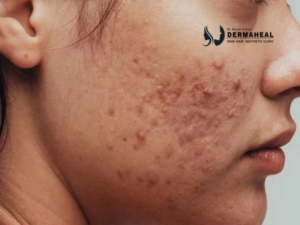


Facial redness can happen for many reasons. Your face may become red after exercise, heat, sun exposure, spicy food, stress, or embarrassment. Usually, this type of flushing settles within a short time.
But what if your face stays red for days or weeks? What if your cheeks frequently feel warm, irritated, itchy, or burning?
Persistent facial redness should not always be treated as a simple skin sensitivity problem. It can be associated with conditions such as rosacea, contact dermatitis, seborrheic dermatitis, acne, sun damage, or reactions to skincare products and medicines. Getting the correct diagnosis is important because treatment depends on the underlying cause.
If you have ongoing facial redness, understanding the possible causes and knowing when to see a dermatologist can help you choose the right next step.
What Causes Persistent Facial Redness?
There is no single cause of facial redness. Several skin conditions and environmental factors can make the face appear persistently red or darker than usual.
1. Rosacea
Rosacea is one of the conditions commonly associated with persistent facial redness.
It often begins with frequent flushing or blushing. Over time, the redness may last longer and can eventually become persistent. It commonly affects the centre of the face, including the cheeks and nose.
Other signs may include:
- Frequent flushing
- Burning or stinging
- Acne-like bumps
- Visible small blood vessels
- Dry or sensitive skin
- Facial swelling
- Eye irritation
Rosacea can affect different skin tones. In darker skin, the change may appear brown or violet rather than obviously red.
2. Skin Irritation or Contact Dermatitis
A skincare product, cosmetic, cleanser, fragrance, hair product, or another substance that touches your face can cause irritation or an allergic reaction.
You may notice redness along with:
- Itching
- Burning
- Dryness
- Scaling
- Swelling
- Small bumps
Sometimes the trigger is obvious. In other cases, a product that you have used for a long time can suddenly cause a reaction.
3. Sun Exposure
Repeated sun exposure can make facial redness more noticeable and can also aggravate certain inflammatory skin conditions.
People with sensitive or rosacea-prone skin may notice increased flushing after spending time outdoors. Daily sun protection is therefore an important part of managing persistent facial redness.
4. Seborrheic Dermatitis
Seborrheic dermatitis can cause red, irritated, oily, or flaky skin. It may affect areas such as the sides of the nose, eyebrows, forehead, hairline, and scalp.
Because several skin conditions can look similar, persistent redness should not automatically be assumed to be seborrheic dermatitis or rosacea.
A dermatologist can help determine the actual cause.
5. Acne or Acne-Like Inflammation
Inflamed acne can make parts of the face look red. However, rosacea can also cause acne-like bumps.
This is one reason persistent redness with bumps can sometimes be difficult to identify without a professional examination. Acne and rosacea may require different treatment approaches.
6. Reactions to Medicines or Skincare Products
Some medicines can make the skin more sensitive to sunlight, while prolonged or inappropriate use of certain topical products can cause irritation.
For example, using steroid creams on the face for longer than directed can lead to skin problems. If redness begins after starting a new medicine or skincare product, tell your doctor or dermatologist.
What Are the Early Signs of Rosacea?
If you are concerned about persistent facial redness, it is useful to recognize the early signs of rosacea.
Early symptoms can include:
- Flushing more easily than before
- Warmth across the cheeks
- Redness that lasts longer after flushing
- Increased sensitivity to skincare products
- Burning or stinging
- Redness around the nose and cheeks
- Small acne-like bumps
Over time, redness may become more persistent, and visible blood vessels may develop.
However, these symptoms do not automatically mean you have rosacea. A dermatologist should make the diagnosis.
What Triggers Facial Redness and Rosacea Flare-Ups?
Triggers vary from person to person.
Common triggers reported with rosacea include:
- Sunlight
- Heat
- Stress
- Spicy foods
- Alcohol
- Certain skincare products
- Some cosmetics
- Exercise
- Wind and cold
- Certain medicines
Keeping a simple record of when your redness becomes worse can help identify personal triggers. Dermatologists may also recommend keeping a trigger diary for several weeks.
You do not necessarily need to avoid every item on this list. The important point is to identify which triggers actually affect your skin.
When Should You See a Dermatologist for Facial Redness?
You should consider seeing a dermatologist if your facial redness:
- Lasts for more than two weeks
- Keeps returning
- Is becoming more noticeable
- Is accompanied by burning or stinging
- Causes itching, scaling, or swelling
- Appears with acne-like bumps
- Is associated with visible blood vessels
- Does not improve after stopping an irritating product
- Is affecting your confidence or quality of life
The American Academy of Dermatology recommends seeing a dermatologist when facial redness lasts more than two weeks because several different conditions can produce similar symptoms.
Eye Symptoms Need Prompt Attention
Rosacea can also affect the eyes.
Symptoms may include:
- Dry or irritated eyes
- Bloodshot eyes
- Burning or stinging
- Light sensitivity
- Swollen eyelids
- Crusting around the eyelashes
If you think your facial condition is affecting your eyes, seek medical attention promptly. Eye involvement in rosacea can require specific treatment.
How Does a Dermatologist Diagnose Facial Redness?
A dermatologist usually starts by examining your skin and asking questions about your symptoms.
You may be asked:
- When did the redness begin?
- Is it constant or does it come and go?
- What makes it worse?
- Do you experience burning or itching?
- Which skincare products do you use?
- Have you recently started any medicines?
- Do you experience acne-like bumps?
- Does sunlight or heat make the redness worse?
In many cases, the diagnosis can be made through a clinical examination. Additional testing may sometimes be required when another condition needs to be ruled out.
How Is Persistent Facial Redness Treated?
Treatment depends on the cause.
If the redness is related to rosacea, a dermatologist may recommend a combination of trigger management, gentle skincare, prescription medicines, and selected procedures.
For persistent rosacea-related colour changes, certain prescription medicines can temporarily reduce visible redness. Procedures such as laser or intense pulsed light may also be considered for selected patients, particularly when visible blood vessels or persistent colour changes are present.
If the cause is contact dermatitis, treatment focuses on identifying and avoiding the trigger and controlling the skin reaction.
For seborrheic dermatitis, treatment may involve medicated skincare or medicines recommended by a dermatologist.
This is why treating facial redness without identifying its cause can be ineffective.
What Can You Do at Home?
While you should seek professional advice for persistent redness, some basic habits may help reduce irritation.
Use Gentle Skincare
Choose fragrance-free, gentle products and avoid repeatedly changing your skincare routine.
If a product causes burning or stinging, stop using it and discuss it with a dermatologist if symptoms continue.
Protect Your Skin From the Sun
Use a gentle, broad-spectrum sunscreen with SPF 30 or higher every day. Physical sun protection such as a hat and shade can also help.
Avoid Scrubbing
Aggressive scrubs and excessive exfoliation can irritate sensitive skin.
Track Your Triggers
Write down when redness becomes worse. Look for patterns involving sunlight, heat, stress, foods, exercise, cosmetics, or skincare products.
Can Persistent Facial Redness Be Cured?
The answer depends on the underlying condition.
For example, some cases of irritation may improve once the trigger is identified and removed. Rosacea, however, is considered a chronic condition. There is currently no cure, but treatment can reduce symptoms, control flare-ups, and help prevent progression.
The earlier persistent redness is properly assessed, the sooner an appropriate treatment plan can be considered.
Frequently Asked Questions
1. What causes persistent facial redness?
Persistent facial redness can have several causes, including rosacea, contact dermatitis, seborrheic dermatitis, acne-related inflammation, sun exposure, and reactions to medicines or skincare products. A dermatologist can help identify the cause.
2. Is persistent facial redness always rosacea?
No. Rosacea is one possible cause, but several other skin conditions can produce similar redness. An accurate diagnosis is important before starting treatment.
3. When should I see a dermatologist for facial redness?
Consider seeing a dermatologist if redness lasts more than two weeks, repeatedly returns, becomes worse, or occurs with burning, itching, swelling, acne-like bumps, or visible blood vessels.
4. Can facial redness from rosacea be treated?
Yes. Although rosacea does not currently have a cure, treatment can reduce flare-ups and symptoms. Depending on the condition, treatment may include prescription medicines, trigger management, skincare, laser, or light-based procedures.
5. Can sunscreen help with facial redness?
Sun exposure can trigger or worsen redness in people with rosacea and other sensitive skin conditions. Daily use of a gentle broad-spectrum SPF 30 or higher sunscreen can help reduce sun-related flare-ups.
Recommended Links
https://dermaheal.co.in/#contact
https://dermaheal.co.in/gallery
https://dermaheal.co.in/treatments
https://dermaheal.co.in/doctors
https://dermaheal.co.in/results
Take the Next Step for Persistent Facial Redness
Persistent facial redness is not something you always need to live with or manage by trying random skincare products.
The right treatment starts with identifying why your skin is becoming red. Whether the cause is rosacea, irritation, dermatitis, acne, sun exposure, or another skin condition, professional evaluation can help you choose an appropriate treatment approach.
If your facial redness is persistent, recurring, burning, or becoming more noticeable, book a consultation with a qualified dermatologist at Dermaheal Skin & Hair Clinic.
Get your skin properly assessed, understand the underlying cause, and start a treatment plan designed for your individual skin needs.