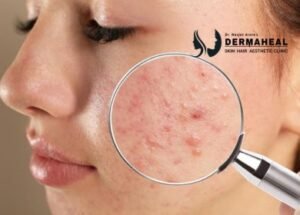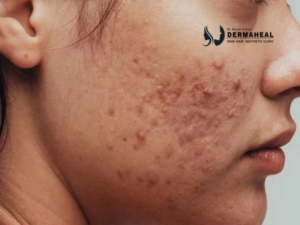


Have you noticed that a pimple heals, but a dark brown or black mark remains in the same place? You may wonder, “Why do acne scars get darker after pimples heal?”
In many cases, the dark mark is not actually an acne scar. It may be post-inflammatory hyperpigmentation (PIH), a type of skin pigmentation that can develop after inflammation from acne. These flat dark spots are especially common in medium to deeper skin tones and can remain visible for weeks or months after the original pimple has disappeared.
The good news is that these marks often improve with time and the right skin care. However, ongoing acne, sun exposure, picking, and skin irritation can make pigmentation darker or cause new marks to develop.
Are Dark Acne Marks the Same as Acne Scars?
No. Dark acne marks and acne scars are different.
A dark, flat area left behind after a pimple is often post-inflammatory hyperpigmentation. It changes the colour of the skin but does not create a depression or raised area.
A true acne scar changes the skin’s texture. It may appear as:
- A small depression or pit
- A wider depressed area
- A raised or thickened scar
- Uneven skin texture
The American Academy of Dermatology notes that flat dark spots left after acne are often mistaken for permanent scars. These spots can eventually fade, although darker marks may take longer to clear.
Understanding the difference is important because acne pigmentation treatment and acne scar treatment are not always the same.
Why Do Acne Marks Get Darker After Pimples Heal?
The main reason is inflammation.
When acne develops, the skin becomes inflamed. This inflammation can stimulate pigment-producing cells called melanocytes. As the skin heals, more melanin may be deposited in the affected area, leaving a brown, grey, or darker patch.
This process is called post-inflammatory hyperpigmentation. It can happen after different types of skin inflammation or injury, including acne. It is more common and often more noticeable in darker skin types.
The original pimple may disappear within days, but the pigmentation can remain much longer.
Why Is the Mark Sometimes Darker Than the Original Pimple?
Acne itself may look red, swollen, or painful. Once the inflammation settles, the remaining pigmentation becomes easier to notice.
Several factors can make the mark appear darker:
1. Strong acne inflammation
Deep or painful pimples can cause more inflammation. Greater inflammation can increase the chance of lingering pigmentation.
2. Picking or squeezing pimples
Touching, squeezing, or popping acne can increase inflammation and damage the skin. This can increase the risk of both pigmentation and acne scarring.
3. Sun exposure
UV exposure can make post-inflammatory pigmentation darker and slower to fade. This is why sun protection is an important part of managing dark acne marks.
4. Skin irritation
Harsh scrubs, aggressive exfoliation, or products that irritate the skin can increase inflammation and potentially make pigmentation more noticeable.
5. New acne breakouts
If new pimples continue to appear, new dark marks may develop before older ones have had time to fade.
How Long Do Dark Acne Marks Take to Fade?
There is no single timeline for everyone.
Some mild marks gradually fade over several weeks, while darker or deeper pigmentation can take months or longer. The AAD notes that some dark spots can last for a year or more, and darker spots may take longer to clear.
Your skin tone, depth of pigmentation, acne severity, sun exposure, and whether new acne continues to develop can all affect how quickly the marks improve.
Therefore, it is better to focus on consistent treatment and prevention rather than expecting a dark spot to disappear within a few days.
Can You Prevent Acne Marks From Getting Darker?
Yes. Preventing inflammation and protecting the skin from UV exposure can help reduce the risk of worsening pigmentation.
Avoid picking your pimples
Do not squeeze, scratch, or repeatedly touch acne. This can increase inflammation and the risk of scarring.
Use sunscreen regularly
Daily broad-spectrum sunscreen can help reduce UV-related darkening of pigmentation. This is particularly important when you already have post-inflammatory hyperpigmentation.
Treat active acne
If acne continues to cause inflammation, new dark marks can keep appearing. Controlling the acne itself is therefore an important part of reducing future pigmentation.
Keep your routine gentle
Avoid excessive scrubbing and aggressive exfoliation. A simple routine that your skin can tolerate is often better than using many strong products at once.
How Can Dermatologists Treat Dark Acne Marks?
Treatment depends on the type and depth of pigmentation, your skin type, and whether active acne is still present.
A dermatologist may recommend a combination of skin care and medical treatments.
Depending on the individual case, options may include:
- Prescription topical treatments
- Azelaic acid or other pigment-targeting ingredients
- Retinoid-based treatment when appropriate
- Chemical peels
- Selected laser or light-based procedures
Not every treatment is suitable for every skin type. In particular, aggressive treatment can sometimes cause additional pigmentation if the skin becomes irritated or inflamed.
A dermatologist can determine whether the problem is mainly post-inflammatory hyperpigmentation, acne scarring, or both, and create a treatment plan accordingly. The AAD recommends individualized assessment for acne and acne-scar treatment because different skin concerns require different approaches.
What If You Have Both Dark Marks and Acne Scars?
It is possible to have both.
For example, you may have a flat brown mark around a depressed acne scar. In this situation, treating only the pigmentation may not fully improve the appearance because the texture change remains.
Acne scars can include depressed scars such as ice-pick, boxcar, and rolling scars, as well as raised scars.
A dermatologist may therefore use different approaches for pigmentation and texture.
At Dermaheal, acne and acne-scar concerns are among the clinic’s listed dermatology concerns, with treatments including chemical peels, MNRF, subcision, TCA-CROSS, Dermapen, and fractional CO2 depending on the concern and treatment plan.
When Should You See a Dermatologist?
Consider consulting a dermatologist if:
- Dark marks keep appearing after almost every breakout
- Acne is painful, deep, or frequent
- Pigmentation is becoming darker
- Over-the-counter products are not helping
- You have both pigmentation and depressed or raised scars
- Acne is affecting your confidence
- You are unsure whether you have a scar or a dark mark
The AAD specifically notes that people with dark spots after acne clears may benefit from seeing a dermatologist, particularly because these spots can indicate significant acne-related inflammation.
Frequently Asked Questions
1. Why does my pimple leave a dark spot after healing?
A pimple can leave a dark spot because inflammation stimulates pigment production in the skin. This is commonly called post-inflammatory hyperpigmentation or PIH. It is more noticeable in darker skin tones.
2. Are dark acne marks permanent?
Usually, flat dark acne marks are not permanent. They can gradually fade, but darker pigmentation may take months or longer to improve. Treatment and appropriate skin care can help in suitable cases.
3. Does sunscreen help acne dark spots?
Yes. Sun exposure can make post-inflammatory pigmentation darker. Regular broad-spectrum sunscreen can help reduce additional UV-related darkening while the marks are fading.
4. Does squeezing pimples cause dark spots?
Squeezing or picking pimples can increase inflammation and skin injury. This can increase the risk of both post-inflammatory pigmentation and acne scars.
5. How can I remove dark acne marks quickly?
There is no single treatment that removes every acne mark quickly. Treatment depends on your skin type, pigmentation, acne activity, and whether true scarring is also present. A dermatologist can recommend suitable topical or in-clinic treatment based on your skin.
Suggested Link
https://dermaheal.co.in/#contact
https://dermaheal.co.in/gallery
https://dermaheal.co.in/doctors
Do Not Let Acne Marks Become a Long-Term Concern
A pimple disappearing does not always mean the skin has completely recovered. If a dark mark remains, it may be post-inflammatory hyperpigmentation rather than a permanent acne scar.
The most important steps are to control active acne, avoid picking, protect your skin from the sun, and avoid unnecessary irritation.
If your acne marks are persistent, becoming darker, or appearing after almost every breakout, a professional skin assessment can help identify the cause and treatment options.
If you are looking for acne pigmentation or acne scar treatment in Dwarka, book a consultation with the dermatology team at Dermaheal. The clinic provides dermatologist-led care for acne, acne scars, pigmentation, and other skin concerns, with treatment plans based on individual skin needs.
Book your consultation with Dermaheal and get a personalised plan for clearer, healthier-looking skin.