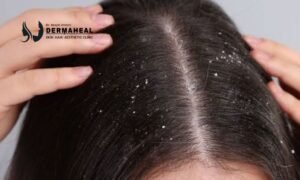

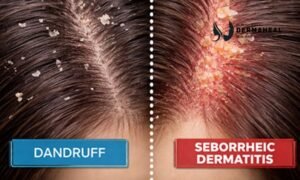
Dandruff is one of the most common scalp concerns. You may notice white flakes on your clothes, an itchy scalp, or increased scaling after a few days without washing your hair. But what if the flakes keep returning, your scalp becomes red or irritated, or similar patches appear around your eyebrows, ears, nose, or beard?
In these situations, the problem may be more than simple dandruff.
Seborrheic dermatitis and dandruff are closely related, but they are not exactly the same. Dandruff is generally limited to the scalp, while seborrheic dermatitis can cause inflammation, scaling, and discoloured patches on the scalp and other oily areas of the skin. The American Academy of Dermatology describes dandruff as the mildest form of seborrheic dermatitis in many cases.
So, how can you tell the difference?
What Is Dandruff?
Dandruff is a common scalp condition that causes visible flakes and may cause itching. The flakes can be white or yellowish and may appear on the scalp, hair, or shoulders.
Dandruff can have several contributing factors, including oily skin, scalp conditions, hair-care habits, stress, and environmental changes. It is not simply a sign of poor hygiene.
Common symptoms include:
- White or yellowish scalp flakes
- Mild itching
- Flaking that is mainly limited to the scalp
- Occasional scalp dryness or oiliness
- Symptoms that come and go
Mild dandruff can often be managed with regular washing and an appropriate anti-dandruff shampoo.
What Is Seborrheic Dermatitis?
Seborrheic dermatitis is a common inflammatory skin condition that usually affects areas where the skin produces more oil.
It commonly affects:
- Scalp
- Hairline
- Eyebrows
- Around the nose
- Behind or inside the ears
- Beard area
- Chest
The condition can cause scaling, itching, inflammation, and changes in skin colour. In darker skin tones, inflammation may appear differently and can sometimes leave darker or lighter patches.
Dermatologists believe that factors such as skin oil (sebum) and a type of yeast naturally present on the skin can play a role in seborrheic dermatitis.
Unlike simple dandruff, seborrheic dermatitis often involves visible inflammation.
Seborrheic Dermatitis vs Dandruff: What Is the Difference?
The easiest way to understand the difference is to look at where the symptoms appear and whether there is inflammation.
| Feature | Dandruff | Seborrheic Dermatitis |
|---|---|---|
| Main location | Usually scalp | Scalp and other oily areas |
| Flaking | Common | Common |
| Itching | May occur | Often occurs |
| Inflammation | Usually mild or absent | More noticeable |
| Redness/discolouration | Usually absent | May be present |
| Greasy scales | Can occur | More common |
| Face involvement | Uncommon | Common |
| Beard involvement | Less typical | Can occur |
| Recurring flare-ups | Common | Common |
The important point is that the two conditions can look very similar. A dermatologist may need to examine your scalp and skin to determine which condition is present.
How Can You Tell If It Is Dandruff or Seborrheic Dermatitis?
1. Look at Where the Flakes Appear
If the problem is mainly small flakes on your scalp, dandruff may be more likely.
If you also have flaky or irritated skin around your eyebrows, nose, ears, beard, or chest, seborrheic dermatitis becomes more likely.
2. Check for Redness or Skin Discolouration
Simple dandruff usually causes flakes without significant inflammation.
Seborrheic dermatitis can cause an irritated rash with redness or changes in skin colour. On darker skin, the affected area may not always look bright red, so changes in colour and texture can be more useful clues.
3. Notice the Type of Scale
Dandruff may produce relatively small, loose flakes.
Seborrheic dermatitis can produce dry or greasy scales, sometimes with yellowish flakes and irritated skin underneath.
4. Does It Keep Coming Back?
Both conditions can recur.
Seborrheic dermatitis is particularly known for flare-ups that can improve and then return. Stress, seasonal changes, and other factors may contribute to flare-ups in some people.
If your scalp problem repeatedly returns despite using regular anti-dandruff products, it may be worth getting a professional scalp evaluation.
Can Dandruff Turn Into Seborrheic Dermatitis?
It is more accurate to say that dandruff and seborrheic dermatitis exist on the same spectrum of scalp conditions rather than saying ordinary dandruff always “turns into” seborrheic dermatitis.
Dandruff can be considered a mild form of seborrheic dermatitis in many cases. However, more significant seborrheic dermatitis involves inflammation and can affect areas beyond the scalp.
This distinction matters because persistent inflammation may require a different treatment approach.
What Causes Seborrheic Dermatitis?
There is no single cause.
Dermatologists believe that the condition is influenced by a combination of factors, including:
- Sebum or natural skin oil
- Yeast naturally living on the skin
- Individual skin sensitivity
- Stress
- Environmental or seasonal factors
- Certain underlying health conditions
The exact reason why some people develop an inflammatory reaction while others do not is not completely understood.
Seborrheic dermatitis is also not contagious.
How Is Dandruff Treated?
Mild dandruff can often be managed with an appropriate anti-dandruff shampoo.
Depending on the product, active ingredients may include:
- Ketoconazole
- Selenium sulfide
- Salicylic acid
- Zinc pyrithione
- Sulfur
- Coal tar
Different ingredients work in different ways, so choosing a product based only on its brand name may not always be useful. Following the product instructions is also important because some medicated shampoos need to remain on the scalp for several minutes before rinsing.
If one product does not improve your symptoms, a dermatologist can help determine whether another formulation or a different diagnosis should be considered.
How Is Seborrheic Dermatitis Treated?
Treatment depends on the severity and location of the condition.
A dermatologist may recommend:
- Medicated anti-dandruff shampoos
- Antifungal treatments
- Prescription scalp or skin treatments
- Short-term anti-inflammatory medication when appropriate
- A suitable cleansing and skincare routine
- Maintenance treatment to reduce future flare-ups
For scalp seborrheic dermatitis, medicated shampoos may be an important part of treatment. If the condition affects the face or other areas, a dermatologist may recommend additional topical treatment.
Because some treatments can cause irritation or are not appropriate for long-term unsupervised use, it is better to follow professional guidance when symptoms are persistent or severe.
Can Seborrheic Dermatitis Cause Hair Fall?
Seborrheic dermatitis primarily affects the skin, but significant itching and inflammation can make the scalp uncomfortable.
Repeated scratching may irritate the scalp further and can contribute to temporary hair shedding from mechanical trauma. Persistent hair fall, however, should not automatically be blamed on dandruff or seborrheic dermatitis.
If you notice persistent hair thinning, excessive shedding, a widening hair part, or a receding hairline, a dermatologist should assess whether another hair-loss condition is also present.
When Should You See a Dermatologist?
You should consider seeing a dermatologist if:
- Dandruff does not improve with appropriate home care
- Your scalp is very itchy
- You develop redness or significant inflammation
- Thick or greasy scales keep returning
- Flaking also appears on your face, ears, eyebrows, or beard
- Your scalp becomes painful or develops sores
- You experience persistent hair fall
- The condition repeatedly comes back
- You are unsure whether you have dandruff, seborrheic dermatitis, psoriasis, eczema, or another scalp condition
Persistent flaking can sometimes resemble other dermatological conditions, including psoriasis, eczema, contact dermatitis, or fungal infections. A proper diagnosis helps avoid treating the wrong problem.
If you are looking for a dermatologist in Dwarka for recurring dandruff, scalp irritation, or seborrheic dermatitis symptoms, professional evaluation can help identify the underlying problem and create an appropriate treatment plan.
Frequently Asked Questions
1. Is seborrheic dermatitis the same as dandruff?
No. They are closely related. Dandruff is generally a milder scalp condition, while seborrheic dermatitis involves inflammation and may affect areas such as the eyebrows, ears, nose, beard, and chest in addition to the scalp.
2. How do I know if I have seborrheic dermatitis or dandruff?
Look for signs such as inflammation, redness or skin-colour changes, greasy scales, and flaky patches on areas other than the scalp. However, similar symptoms can occur with other skin conditions, so a dermatologist can provide a more accurate diagnosis.
3. Can dandruff be treated at home?
Mild dandruff can often be managed with regular washing and an appropriate anti-dandruff shampoo. If symptoms persist, become severe, or are accompanied by significant itching or inflammation, consult a dermatologist.
4. Does seborrheic dermatitis go away permanently?
Seborrheic dermatitis can often be controlled successfully, but it may return after periods of improvement. A dermatologist can recommend treatment for active flare-ups and a maintenance routine to help reduce recurrence.
5. When should I see a dermatologist for dandruff?
See a dermatologist if dandruff is severe, persistent, very itchy, associated with redness or swelling, appears on your face or other body areas, or does not improve with appropriate anti-dandruff care. These signs may indicate seborrheic dermatitis or another scalp condition.
Suggested Links
https://dermaheal.co.in/#contact
https://dermaheal.co.in/doctors
Get the Right Diagnosis for Your Scalp
Dandruff and seborrheic dermatitis can look similar, but they are not always managed in exactly the same way. Flakes alone do not tell the whole story. The location of the scaling, presence of inflammation, recurrence, itching, and involvement of other areas can help distinguish between conditions.
If your dandruff keeps returning, your scalp is persistently itchy or inflamed, or flakes are appearing around your eyebrows, ears, nose, or beard, do not keep switching products without understanding the cause.
Book a consultation with Dr. Navjot Singh Arora at Dermaheal Skin & Hair Clinic in Dwarka for a professional assessment of your scalp and personalised treatment guidance.
Visit Dermaheal Skin & Hair Clinic
Address:
C-712, Ramphal Chowk, Block D, Sector 7 Dwarka, Palam, near Shiksha Bharti School, New Delhi – 110075
Contact:
+91 80809 10191
+91 73794 64999
Email:
info.dermaheal@gmail.com
Clinic Timings:
Monday to Saturday: 10:00 AM – 7:30 PM
Sunday: 10:00 AM – 7:00 PM
Book Your Consultation Today and take the first step toward healthier scalp and hair.